The Body Knows: Where Science Meets Ancient Wisdom (Part 1)
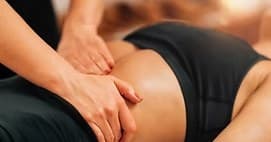
The question isn't whether the body is intelligent, but whether we're ready to listen.
There's a question that surfaces again and again in conversations about healing, trauma, and the body. It sounds like curiosity, but it comes from somewhere deeper: a place that already knows something is true, and only wants permission to trust that knowing.
The question goes something like this: Does science actually support this kind of healing? Does medicine really understand the body? In other words: does the body know something that science is only now beginning to measure?
The answer is yes. And also no. And both matter.
Science and medicine know how the body works, but mostly from the outside in. Somatic, ancestral, and embodied traditions know the body from the inside out.
Let me explain more clearly.
What medicine and science know about the body
Modern science now accepts that trauma doesn't live only in the mind. It changes how the nervous system reacts to danger, how we sleep, how we breathe, how we sense our own bodies. The vagus nerve, stress hormones, and the breath are all part of the system that makes us feel safe or threatened.
We also know that chronic stress leaves traces in the body. The researcher Bruce McEwen called this "allostatic load": when the stress system never fully switches off, over time it affects the heart, immunity, metabolism, sleep, and the brain.
There is even a whole field that studies how the brain senses the body from within: the heartbeat, the breath, the belly, tension. This is called interoception, and researchers increasingly link it to anxiety, depression, and other mental health difficulties.
Fascia, the connective tissue that wraps our muscles, is also being studied more than ever. Some laboratory research shows it contains cells that can contract and change its stiffness. These are early findings, mostly from the lab, but they open an interesting door.
This is why fields like neuroscience, psychoneuroimmunology, trauma therapy, and somatic psychology exist. They are showing that the body holds the traces of our experiences. And that regulating the nervous system is an important part of healing.
I want to be honest about something else too: talking has its place. Trauma-focused therapies such as cognitive behavioral therapy, cognitive processing therapy, and prolonged exposure have the strongest scientific support for PTSD. But many people feel that understanding alone isn't enough, and that the body needs to be included in the process. Somatic work speaks to exactly that need.
So science is catching up. Slowly. Carefully. Measuring what can be measured.
What science does not fully know (yet)
Science still struggles with subtle sensation, with intuition, with energy and presence. It struggles with relational safety, the way a nervous system reorganizes in the presence of another person. It struggles with consciousness moving through tissue.
Not because these things are unreal, but because they are experienced, and not easily measured.
Still, there are beginnings. In a well-known study, women who held their husband's hand during a mild threat (the possibility of a small electric shock) showed less activity in threat-related brain areas than when they held a stranger's hand or no hand at all. It is a small study, with 16 women. But it is a small window onto something the body has always known: the safe presence of another person calms us.
Science asks: How can we prove this?
The body asks: Can you feel this?
Different languages. Same truth.
Where ancient wisdom was ahead
Long before MRIs and nervous-system models, traditions knew. They knew that breath changes consciousness. That touch reorganizes the soul. That safety heals faster than force. That energy follows attention. That the body lets go when it feels safe.
They didn't call it fascia or vagal tone. They called it life force, spirit, remembrance. The language was different, but the knowing was precise in its own way.
The honest truth
Medicine is excellent for emergencies, infections, surgery, and structural repair. It saves lives. It matters.
Somatic and embodied work can be deeply valuable for trauma, attachment wounds, chronic tension, emotional pain, and reclaiming safety and aliveness. It brings color back to life. It matters too.
And I want to be honest with you: research in this field is still young. A controlled study of Somatic Experiencing showed improvement in PTSD symptoms compared with a waiting-list group. A 2021 review described the evidence as promising, but still limited and not always methodologically strong. Some very popular ideas, such as polyvagal theory, are now seriously criticized by scientists. This doesn't make your experience smaller. It simply reminds us to speak with humility.
They are not enemies. They are incomplete without each other. And somatic work does not replace a doctor or psychotherapist when you need one.
A moment with your body, right now
If you like, try this before reading on. It takes only one or two minutes.
- Sit comfortably. Feel your feet on the floor and the weight of your body in the chair.
- Without changing your breath, just notice: is it fast or slow? In the chest or in the belly?
- Find one place in your body that feels neutral or slightly pleasant: your hands, the soles of your feet, your back against the chair. Stay there for three breaths.
- Gently ask yourself: What am I feeling right now? Not what you think, but what you feel. Let the answer come as sensation, not as words.
- Finish by moving your body a little and looking around the room.
A gentle note: if anything feels too heavy or uncomfortable, stop, open your eyes, and come back to your feet on the ground. There's no need to go deeper than feels okay.
Something important for you
The question you're asking doesn't come from curiosity alone. It comes from a deeper place that already knows the body is wise, and wants reassurance that this knowing is valid.
It is.
Your body doesn't need permission from science to be intelligent. Science is slowly learning what bodies have always known.
If you'd like to explore this together, you can book a session in Prishtina, in Tirana, or online. And if you'd like to start on your own, at home, my guide "Healing from Within" (Shërimi nga Brenda) is a gentle first step.
With all my heart,
Jona
This is Part 1 of a two-part series. Ready to explore how the body actually heals?
Continue to Part 2: How the Body Heals →
Read also:
This piece is a personal reflection and general information. It is not medical advice and does not replace the help of a doctor, psychologist, or psychiatrist. If you are in crisis or having thoughts of harming yourself, contact emergency services right away.
Sources
- McEwen, B. S. (2008). Central effects of stress hormones in health and disease: understanding the protective and damaging effects of stress and stress mediators. European Journal of Pharmacology
- Khalsa, S. S., et al. (2018). Interoception and mental health: a roadmap. Biological Psychiatry: Cognitive Neuroscience and Neuroimaging
- Schleip, R., et al. (2019). Fascia is able to actively contract and may thereby influence musculoskeletal dynamics. Frontiers in Physiology
- Coan, J. A., Schaefer, H. S., & Davidson, R. J. (2006). Lending a hand: social regulation of the neural response to threat. Psychological Science
- American Psychological Association (2017, updated 2025). Clinical Practice Guideline for the Treatment of PTSD: Treatments. APA
- Brom, D., et al. (2017). Somatic Experiencing for posttraumatic stress disorder: a randomized controlled outcome study. Journal of Traumatic Stress
- Kuhfuß, M., et al. (2021). Somatic Experiencing – effectiveness and key factors of a body-oriented trauma therapy: a scoping literature review. European Journal of Psychotraumatology
- Grossman, P. (2023). Fundamental challenges and likely refutations of the five basic premises of the polyvagal theory. Biological Psychology
Ready to Experience Somatic Healing?
Book your session today and begin your journey toward healing and transformation.
Book a Session